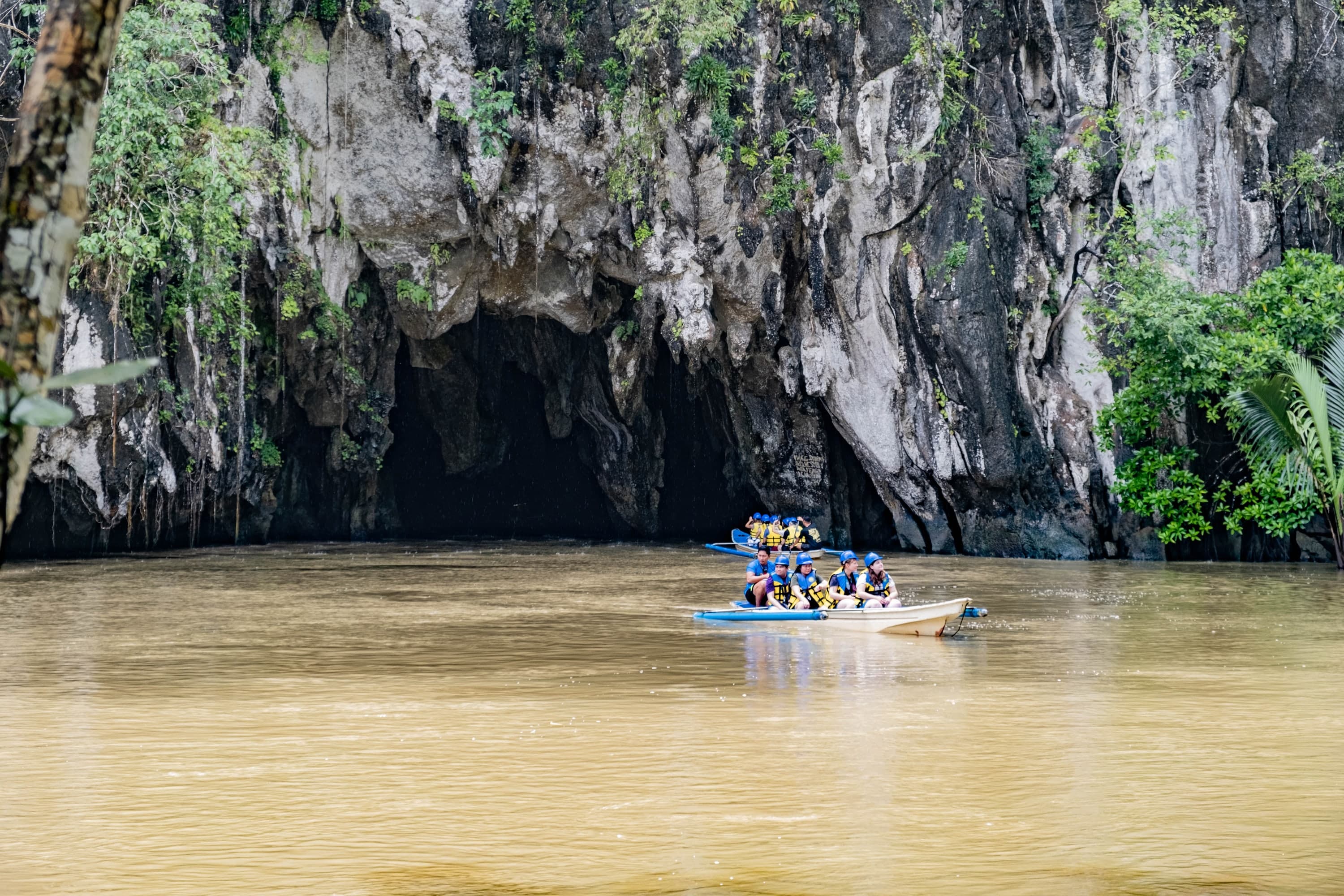
Once we arrived on the island of Palawan, we noticed that quite a few things were different from Cebu. There was a different language, as in almost every island region. So we learned that each region had its own dialect or language, and that Tagalog and English were "only" the official languages. In the Philippines you get around by tricycle (converted or extended mopeds for carrying passengers) and scooter, or by car in busier areas. Tricycle rides were extremely cheap and soon became part of our everyday life when we hadn't rented our own moped. From Puerto Princesa we booked a tour to the UNESCO World Heritage Site Puerto Princesa Subterranean River National Park, known as the Underground River. And just like that we could tick off another one in our UNESCO World Heritage collection. We drove into the nature reserve by van, from where boats took us to a bay where the cave entrance is.
What's unusual about this cave river is that it's seawater flowing through the cave passages, which creates a unique, special ecosystem. Everything was well organised and also busy. In smaller longboats we were then ferried into the flooded cave in groups, and an audio guide whispered all kinds of information to us in our chosen language about how the cave formed and about its inhabitants. The Underground River is 8.2 km long in total, of which only about 4 km are currently open to the public. We probably only travelled 2 km of it. On the boat tour you could look at great formations in the rock shaped by the water, which looked like fantastic figures. Many of the figures resembling people had been named after saints. So you passed figures of Jesus, Mary and the Last Supper made of dripstone. Most impressive for me was a formation that looked as if a gigantic pterosaur was climbing down the wall upside down. Water dripped from the ceiling everywhere, and the darkness the boatman steered through was only lit by the torches of the guides or some tourists. Because of these two factors we couldn't take any photos of the cave itself this time. We went as far as the largest hall of the accessible part of the cave, also called the Cathedral, and then turned around to go back the same way and see the formations from the other perspective. The largest hall of this system, by the way, is 120 m wide and 60 m high.
During our boat ride we had the chance to look at lots of small bats hanging from the ceiling or sleeping in rock niches. The audio guide told us that at a certain time of year there are so many bats in the cave that tours are impossible. We were also advised to always keep our mouths closed when looking up, so that nothing unwanted could fall in.
As we went past, we even saw a small cave snake stretching out on the rock. There were also brownish macaques on land, and they were a good photo opportunity for the groups of passengers waiting for their longboat.
After this impressive and informative tour we took a van to Port Barton. Since most tourists go straight on to the better-known, even more distant El Nido, we sat all alone in a 10-seater and had a very comfortable ride to our next stop.