East Sumba
On the way to the east of this Indonesian island in the province of East Nusa Tenggara (Lesser Sunda Islands), the landscape becomes increasingly steppe-like, and wide grasslands dominate. More and more grazing, free-roaming small horses appear in the distance and next to the road. We learn that this is a separate breed of horse typical of the island, especially suited to the traditional horse races held here. Horses have a special status here, and you come across them almost everywhere, even in town. We stopped at a magnificent viewpoint (Bukit Wairinding), from which you could look down over a far-reaching landscape of hills in various shades of brown and green.
Our new accommodation lay on a river a little outside the largest town in the east and offered nice opportunities for walks. The owner, Freddy, was a nature lover and the hotel (Morinda Villa and Resto) was built sustainably. He originally came from a family of weavers with a long tradition. We were lucky enough to accompany him on an errand to buy textiles, and he gave us a tour of the nearby villages that specialise in producing ikats, Sumba's traditional textiles. Making a single cloth can take up to two years. It is used as a sarong (garment), as a burial offering or as a decorative cloth.
The fibres are made by hand from hemp and spun into yarn. The main dark-blue dye, indigo, is also produced laboriously from indigo plants. The traditional patterns are designed and tied off by hand, then dyed in several steps and hung up to dry. The value and price of such a garment or wall hanging reflect the effort.
We were also allowed to see the inside of a traditional hut. The hut was about 60 m² and several family groups lived in it. In the middle stood 3 chests in which the embalmed bodies of the deceased are kept until the family can afford a proper burial to lay them to rest in the monoliths. The chests were so old that the ikats wrapped around them had already faded.
I believe Freddy said the oldest body had been lying in there for more than 15 years.
On the remaining days we visited another waterfall (Air Terjun Wei Marang), which flowed into an almost grotto-like rock basin where you could bathe in peace after hiking down a lot of steps. The water was super refreshing and we could even climb up the small waterfall and then carefully jump down into the shallow water.
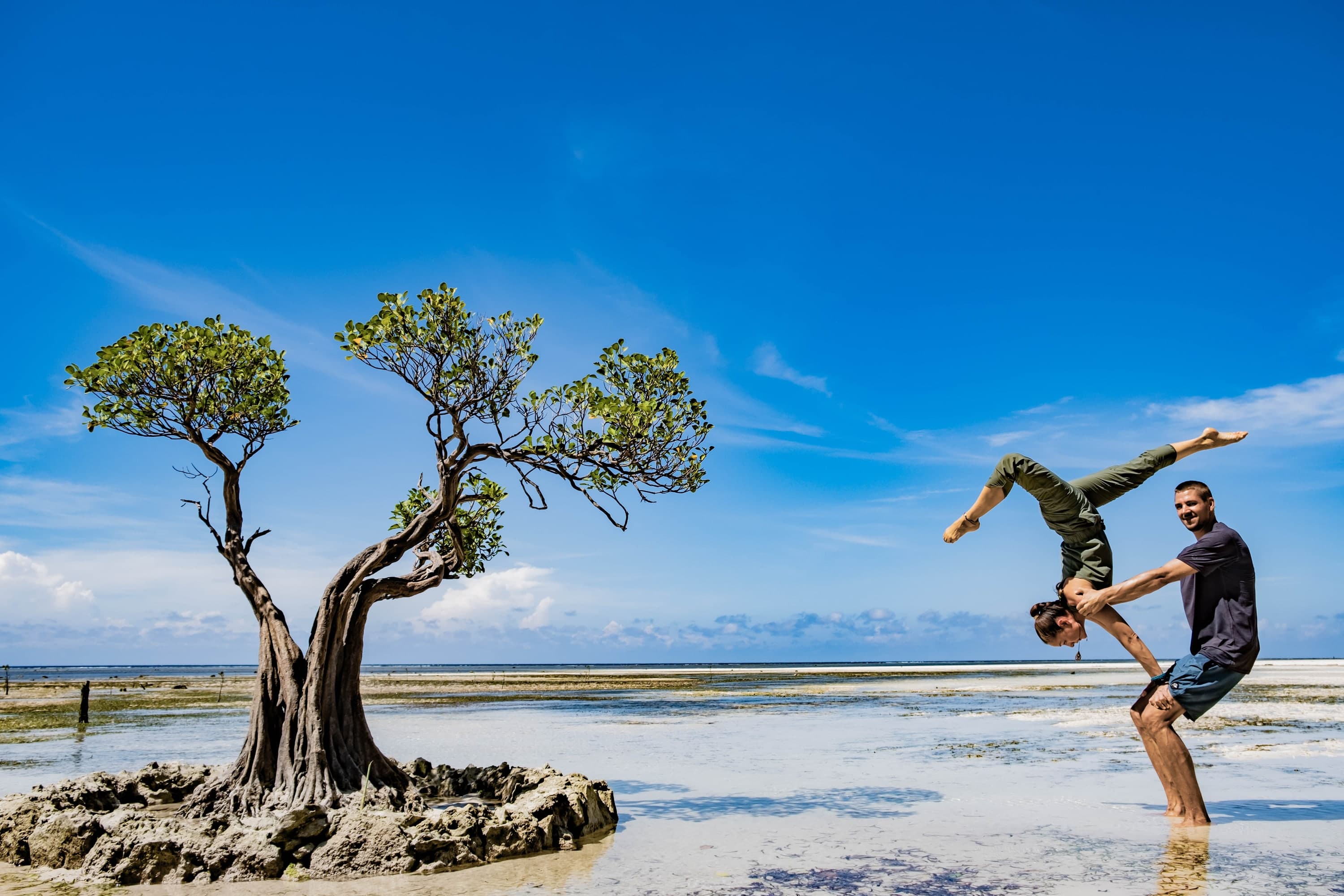
We visited Walakiri Beach twice, known for its sparse mangrove landscape. As soon as you set foot in the shallow water at low tide, which stretches out for kilometres, you're standing in a minefield of starfish. I've honestly never seen so many starfish at once, side by side and spread over such a long stretch. At low tide the landscape, with its crooked, lonely mangroves and stranded boats, conveyed a mood also found in some of the paintings by the artist Salvador Dalí.
On the last day we made a long trip to a canyon that, unfortunately, is somewhat off the beaten track (Air Tanggedu), with a river that also had one impressive and many small waterfalls and where you could bathe in the natural pools along its branches. We spent quite some time here, letting the current massage us or jumping from small cliffs into the pool below.
Full of wonderful and surreal memories of a very special island with even more mysterious places, and after saying goodbye to Dany, our loyal companion, we boarded our plane and flew via Bali (Kuta) on to Kuala Lumpur, Malaysia.
As always, here are our video summary and pictures: